
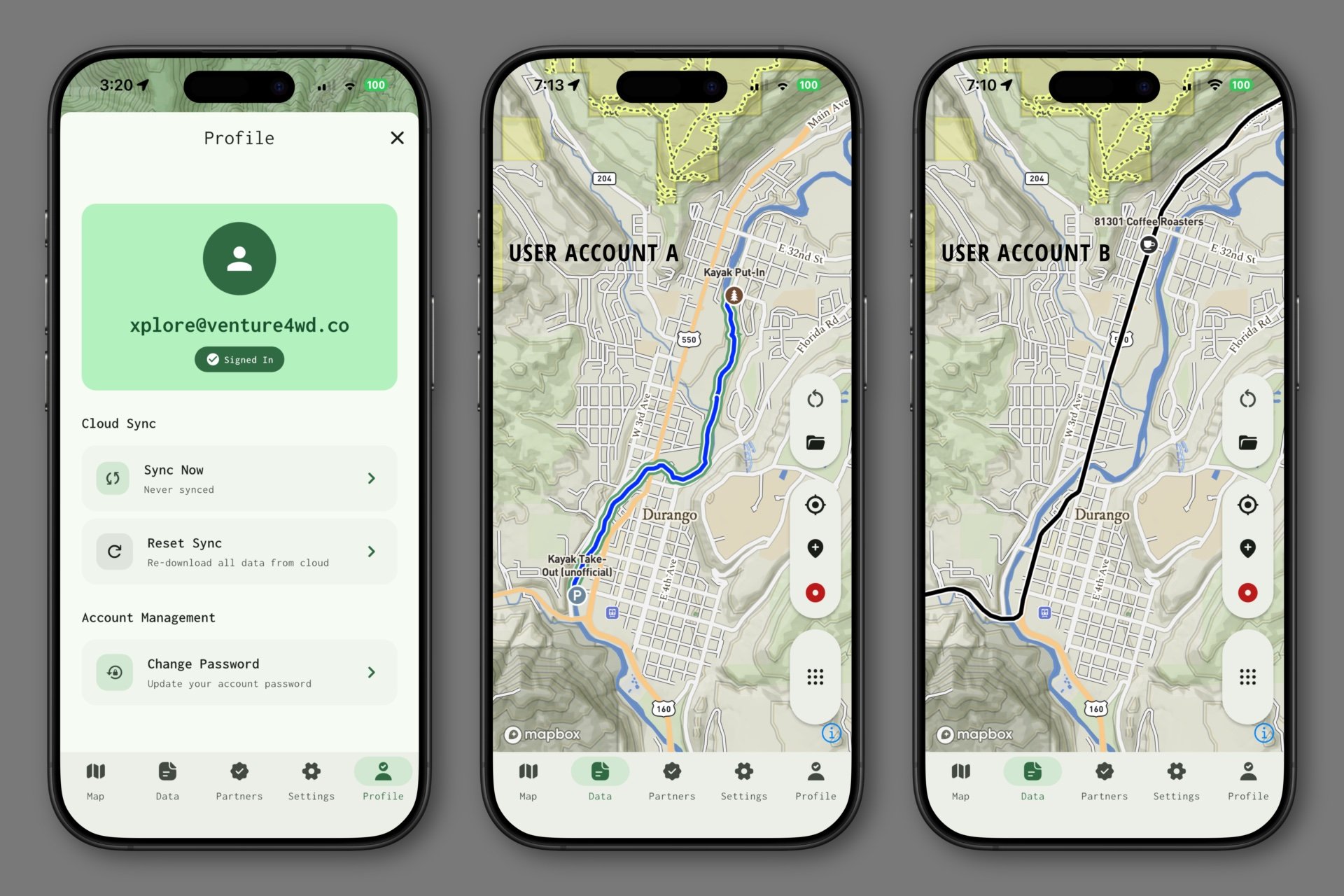
Up until now, development and testing have all been focused on the single user experience as we fleshed out the app’s core features. Now, I’ve turned my attention to improving support for user accounts, authentication, and session scope.
A user might have multiple accounts — perhaps because they share their device with family members, or use Mapkind GPS for both business and personal applications — but they don’t want the data to intermingle.
Data such as waypoints, track logs, or routes that is created or ingested by an authenticated user is only visible to that user and only syncs between that user’s devices. The navigation data persists on-device so it doesn’t have to be re-synced after every login.
If you want to use the GPS app, but don’t want to create an account, that’s fine too!
Mapkind GPS supports an anonymous, unauthenticated user state so you don’t need to be logged in to still make full use of the app’s core features. An account is only required to sync data between devices, back up data to “the cloud”, and to take advantage of other connected features that I’ll talk about later.